Sanssouci Park in Potsdam
One ticket for Sanssouci Palace and all open SPSG palaces in Potsdam – with a fixed admission time for Sanssouci Palace.
- Access to all palaces in the park
- Mobile tickets
- No queues
Sanssouci Palace is located within Sanssouci Park in Potsdam. Covering approximately 290 hectares, Sanssouci Park — with its numerous palaces representing different architectural styles — is one of the most beautiful landscaped parks in Germany.
It is no surprise that this extraordinary masterpiece of architecture and garden design attracts many thousands of visitors each year. Here you will find comprehensive information about the park and its main attractions.
One Ticket – Discover the Palaces of Sanssouci
Table of contents
ToggleSanssouci Park – A Masterpiece of Garden Art Through the Centuries
Sanssouci Palace is located within Sanssouci Park in Potsdam. Covering approximately 290 hectares, the park, with its numerous palaces in different architectural styles, is one of the most beautiful landscaped parks in Germany. It is no surprise that this extraordinary creation of architecture and garden art attracts hundreds of thousands of visitors each year.
The park was laid out beginning in 1744 under Frederick the Great and was expanded and redesigned several times over the centuries. Renowned designers such as Georg Wenzeslaus von Knobelsdorff, Heinrich Christian Eckstein, and Peter Joseph Lenné helped shape its development.
The Heart of the Park Consists of Two Major Areas:
Sanssouci Park, a masterpiece of garden design, was laid out beginning in 1744 under Frederick the Great and was expanded and redesigned several times over the years. Numerous renowned garden designers contributed to its development, including Georg Wenzeslaus von Knobelsdorff, Heinrich Christian Eckstein, and Peter Joseph Lenné, among others.
The Heart of the Park Consists of Two Impressive Areas:
- The formal Frederickian pleasure garden
Created between 1744 and 1757, this elegant complex of vineyard terraces extends west of the Obelisk. Visitors admire its symmetrical layout and the carefully designed terraced slopes. - The sentimental landscape garden (Rehgarten)
Developed between 1745 and 1763, this section adjoins the pleasure garden to the west and stretches as far as the New Palace. Here, guests can enjoy the enchanting atmosphere of a picturesque landscape in which natural beauty merges harmoniously with architecture.
Sanssouci Park offers visitors a fascinating journey through different garden styles and historical periods. Each section tells its own story and reflects the masterful work of the garden artists who brought Frederick the Great’s vision to life. A walk through this green oasis is a truly magical experience, highlighting both the beauty of nature and the park’s cultural significance.
Major Attractions in Sanssouci Park
In addition to Sanssouci Palace, there are many other attractions to discover within Sanssouci Park. These include the New Palace, the Orangery Palace, the Chinese House, Charlottenhof Palace, and the Church of Peace — as well as the park itself.
Sanssouci Park is a highlight in its own right. With its diverse gardens, landscapes, sculptures, and water features, it is a masterpiece of garden design and a place of relaxation and inspiration. A visit to Sanssouci Park promises an unforgettable experience that combines the beauty of nature with the splendour of royal architecture.
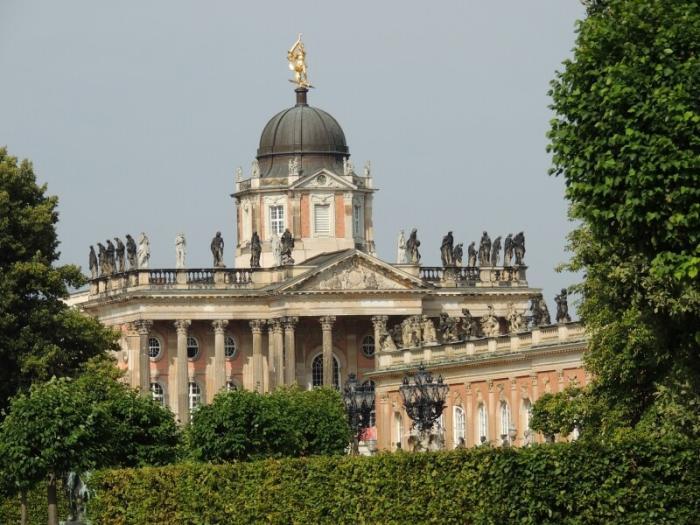
New Palace in Sanssouci Park
The New Palace, also known as the “Fanfaronade,” was commissioned by Frederick the Great as a symbol of triumph following the end of the Seven Years’ War. The architects responsible for this magnificent Rococo masterpiece included Büring, Manger, and Gontard. Constructed between 1763 and 1769, the palace is located in the western part of the park, where it forms a majestic architectural conclusion.
The New Palace was the last major architectural project created by Frederick the Great and served as a lavish residence for royal celebrations and official receptions. A visit to the New Palace offers a fascinating insight into Prussian royal history and stands as an impressive example of Rococo architecture.
Further information about the New Palace is available here. For admission, we recommend the Sanssouci+ ticket, which is valid for all palaces.
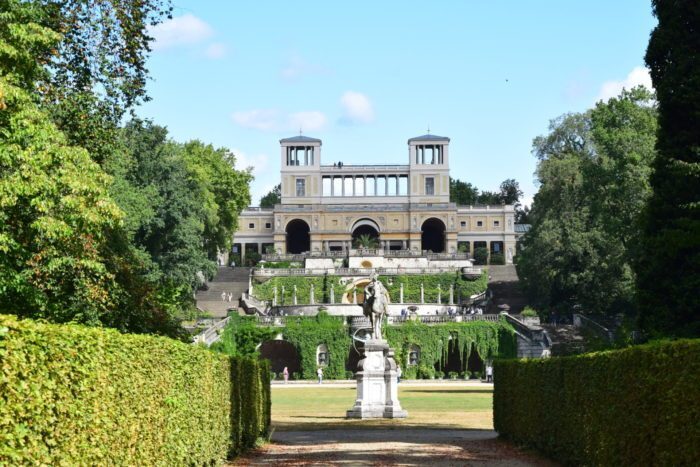
Orangery Palace in Sanssouci Park
The impressive Orangery Palace in Sanssouci Park is a remarkable example of Italian Renaissance architecture. Commissioned by King Frederick William IV, construction was completed between 1851 and 1860 under the direction of Ludwig Persius.
Stretching nearly 300 metres, the Orangery Palace captivates visitors with its grand design. Architectural elements inspired by the Italian Renaissance can be seen throughout this majestic building. The palace once housed the king’s valuable collection of orange trees and exotic plants.
Today, it is a popular attraction, inviting visitors to explore the fascinating history and aesthetic vision of this remarkable era.
Further information about the Orangery Palace is available here.
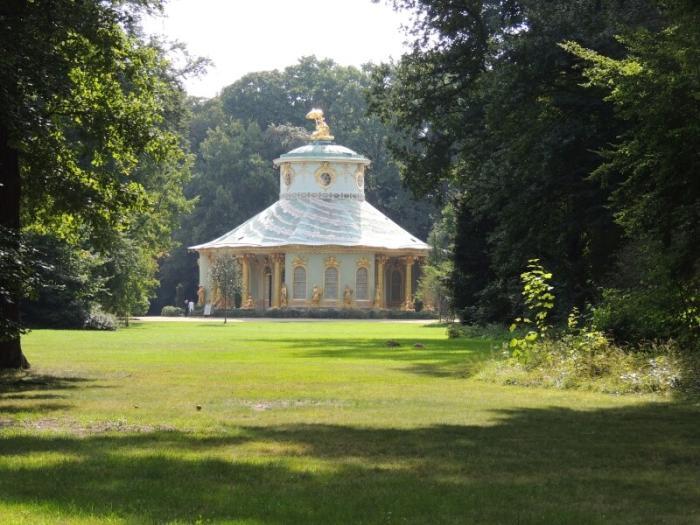
Chinese House
The Chinese House, a jewel located near Frederick the Great’s summer residence Sanssouci, captivates visitors with its unique beauty and refined elegance inspired by 18th-century Chinoiserie. The small pavilion was commissioned by Frederick the Great himself and is considered a masterpiece of Rococo architecture with Oriental influences.
Surrounding the Chinese House are life-sized gilded sandstone figures depicting musicians and diners in imagined Chinese attire. These elaborate sculptures create a distinctive atmosphere and invite visitors to immerse themselves in the European fascination with East Asian culture that shaped the artistic vision of the time.
The Chinese House is a place of tranquillity and reflection, where the beauty of nature and the romantic interpretation of the Far East come together. A visit to this enchanting pavilion is a must for anyone interested in art, culture, and history.
Further information about the Chinese House is available here. For admission, we recommend the Sanssouci+ ticket, which is valid for all palaces.
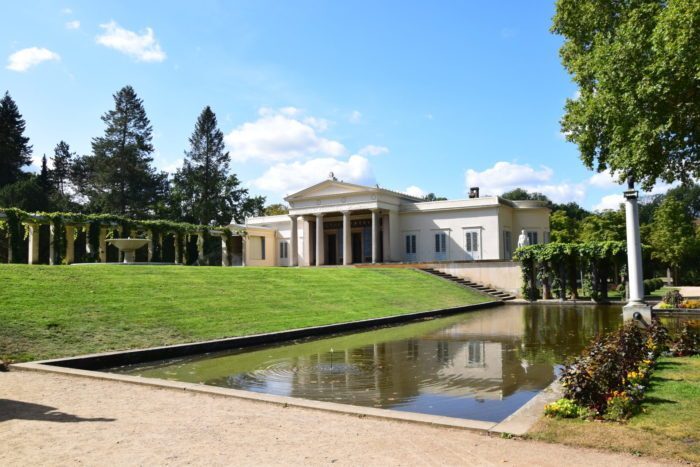
Charlottenhof Palace
Charlottenhof Palace, a masterpiece of Neoclassical architecture, was built as a charming summer residence for Crown Prince Frederick William IV and his wife Elisabeth. Inspired by Italian country villas, the palace reflects the timeless elegance of classical landscape design.
Originally constructed between 1756 and 1758 by Johann Gottfried Büring, the palace underwent a significant redesign between 1826 and 1829 under the direction of Karl Friedrich Schinkel and Ludwig Persius. This transformation gave Charlottenhof Palace its distinctive architectural character that visitors admire today.
Charlottenhof Palace is closely connected to its natural surroundings, offering visitors a harmonious interplay between architecture and landscape. It is a place of tranquillity and beauty, where guests can experience the charm of a bygone era and immerse themselves in the refined world of Neoclassical design.
Visitors have the opportunity to explore the palace’s fascinating history and admire the elegant beauty of its rooms and gardens. A visit to Charlottenhof Palace promises an unforgettable experience rich in cultural and aesthetic inspiration. For admission, we recommend the Sanssouci+ ticket, which is valid for all palaces.
Church of Peace
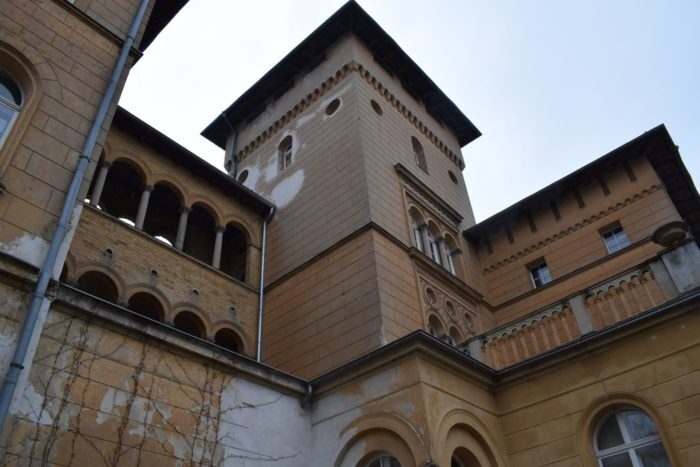
In the idyllic Marly Garden, near the Green Gate, stands the enchanting Church of Peace. A work of remarkable artistic beauty, it was built according to the vision of the Prussian monarch Frederick William IV and designed by court architect Ludwig Persius.
The church is a true expression of Frederick William IV’s deep-rooted religiosity, with his spiritual devotion reflected in every architectural detail.
Roman Baths
The Roman Baths in Sanssouci Park in Potsdam are an impressive example of King Frederick William IV’s fascination with Italy. Between 1829 and 1840, he commissioned an ensemble in the Italian style that idealizes ancient Roman villas and thermal baths.
Architect Karl Friedrich Schinkel, his student Ludwig Persius, and landscape designer Peter Joseph Lenné combined various Roman-Italian stylistic elements to create a nostalgic and romantic architectural composition.
Today, the Roman Baths are used for special exhibitions and offer visitors a fascinating insight into 19th-century Romantic architecture.
Historic Windmill
The Historic Windmill near Sanssouci Palace, famous for the legend of Frederick the Great and the miller Grävenitz, was reconstructed between 1991 and 1993 after being destroyed during the Second World War.
Today, the windmill is operated as a museum by the Mill Association Berlin-Brandenburg. It features exhibitions on the history of milling and grain processing. Visitors can purchase “Sanssouci flour” and enjoy panoramic views of the palace grounds.
Rebuilt in the style of 18th-century Dutch windmills, the mill symbolizes Frederick II’s sense of justice and represents an important chapter in Potsdam’s milling tradition.
Dragon House
The Dragon House, located on the northern edge of Sanssouci Park, was built between 1770 and 1772 in the Chinoiserie style and is distinguished by its gilded dragon decorations. Originally planned as accommodation for vineyard workers, it was designed by Carl von Gontard and inspired by the Ta-Ho Pagoda in Canton.
Today, the Dragon House operates as a restaurant and café, known for its historic ambiance and classical chamber music events. Since 2012, it has been managed by Alexander Hortig and offers guests not only an elegant setting but also the opportunity to enjoy a refined three-course dinner by candlelight.
Belvedere on the Klausberg
The Belvedere on the Klausberg, built between 1770 and 1772 under Frederick the Great, is the last structure from the Frederickian era in Sanssouci and the first masonry belvedere constructed in Potsdam. Inspired by ancient Roman palaces, it offers breathtaking panoramic views over Sanssouci Park and the city of Potsdam.
After suffering severe damage during the Second World War, the building was extensively restored and today once again features its decorative stucco marble finishes and oak parquet flooring. The Belvedere serves as an important viewpoint and cultural landmark within the UNESCO World Heritage Site of Potsdam’s cultural landscape.
Further information is available on our partner page Potsdam Sanssouci.
Further Information and Literature
Guided Tours and Tickets
Explore the enchanting palace gardens of Sanssouci in Potsdam through our carefully selected guided tours. Immerse yourself in the splendour of the park and experience Sanssouci Palace in all its magnificence.
Take advantage of the wide range of options offered by our partners GetYourGuide and Viator to discover Sanssouci Park, the majestic Sanssouci Palace, and other fascinating attractions in Potsdam. Your unforgettable journey of discovery awaits.
Experience Potsdam on an exclusive walking tour through its more than 1,000-year-old historic city centre and enjoy a relaxed stroll through the beautifully maintained gardens of the historic Sanssouci Palace.
Frequently Asked Questions About Sanssouci Park
How Much Does It Cost to Visit Sanssouci Park and Sanssouci Palace?
Admission to Sanssouci Park is free of charge. Tickets are required for entry to the palaces and indoor attractions.
We recommend the Sanssouci+ combined ticket, which grants one-time admission to all* open palaces operated by the Prussian Palaces and Gardens Foundation Berlin-Brandenburg in Potsdam, including Sanssouci Palace, on a single day.
Reduced tickets are available from €17. Further information on prices and ticket options is available here.
Which Tickets Are Most Recommended?
For visitors planning to explore several palaces, the Sanssouci+ ticket is the best option. It allows convenient access to multiple sites in one day and offers excellent value for a comprehensive visit.
What Are the Main Attractions in Sanssouci Park?
Sanssouci Palace is, of course, the centrepiece and main attraction of the park. However, the approximately 290-hectare Sanssouci Park offers many additional highlights.
In addition to the New Chambers and the Picture Gallery, visitors can explore the New Palace, the Orangery Palace, the Chinese House, the Roman Baths, the Church of Peace, and much more.
Let yourself be inspired by the majestic park landscape and allow plenty of time for your exploration.
What Is the Best Way to Reach Sanssouci Palace and Is There Parking Nearby?
Although we recommend visiting Sanssouci Palace by public transport or on foot, we understand that travelling by car may sometimes be necessary.
Here, we provide an overview of the best parking options around Sanssouci Park to help you plan your visit conveniently.
Are There Hotels Near Sanssouci Park and Sanssouci Palace?
For your visit to Sanssouci Park and Sanssouci Palace, we recommend the following hotels due to their excellent location and outstanding guest reviews.
Discover the ideal accommodation for your stay in Potsdam and enjoy convenient access to the park and its historic landmarks. MAXX Hotel Sanssouci Potsdam, Hotel Villa Monte Vino, Wyndham Garden Potsdam, Hotel Brandenburger Tor Potsdam