Vineyard Terraces at Sanssouci Palace
One ticket for Sanssouci Palace and all highlights in Sanssouci Park – no waiting times.
- Access to all palaces in the park
- Mobile tickets
- No queues
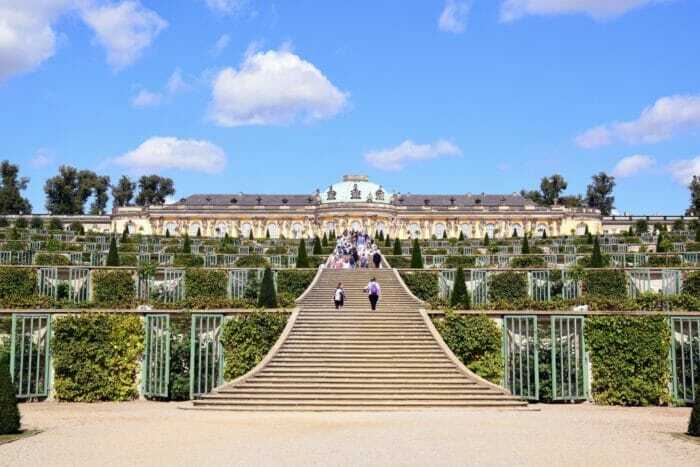
The famous garden view of Sanssouci Palace was created after Frederick the Great decided to establish a terraced vineyard on the southern slope of the Bornstedt ridge. Oak trees once stood on this hill. Here you will find background information and historical insights into the vineyard terraces of Sanssouci.
Table of contents
ToggleHistory of the Vineyard Terraces
During the reign of the “Soldier King,” Frederick William I of Prussia, oak trees covered the hill. They were felled for the expansion of Potsdam and to stabilize the marshy ground. What remained was what Frederick II later called a “desolate hill.”
On 10 August 1744, Frederick II ordered the transformation of this barren slope into a terraced vineyard. He was already familiar with viticulture from his time as crown prince. After Frederick William I had converted the former pleasure garden at the Potsdam City Palace into a parade ground in 1714, a new pleasure and kitchen garden — the Marly Garden — was created northwest of the Brandenburg Gate. In this context, early vineyard plantings were also established on the nearby Bornstedt Mill Hill.
Thus, the iconic garden view of Sanssouci was born.
Construction of the Vineyard Terraces
The vineyard terraces were largely completed by 1746. The project was directed by architect Friedrich Wilhelm Diterichs, while the horticultural work was overseen by Philipp Friedrich Krutisch.
Diterichs divided the southern slope into six broad terraces, with walls that curve inward toward the center. This design maximized exposure to sunlight.
A variety of native fruit and grape varieties were cultivated on the terraces, along with imported species housed in glazed niches. During the summer months, 84 orange trees in tubs were placed between yew pyramids.
132 Steps to the Palace
Originally, 120 steps led up the central axis of the terraces. Today, there are 132. The terraces are divided into six levels and include access ramps on both sides of the slope.
Beginning in 1745, a Baroque ornamental garden with lawns was laid out below the terraces. At its center, the Great Fountain — a four-lobed basin — was completed in 1748.
The Royal Tomb
Frederick II felt such a deep attachment to Sanssouci Palace that he wished to be buried in a crypt on the uppermost vineyard terrace. Even in death, he wanted to remain close to his beloved retreat. This wish was fulfilled only in 1991. Today, the grave of Frederick the Great is located on the upper terrace.